Barcode Green Leaf, Vector: Icons & Graphics for Earth-Conscious Brands
As a graphic designer who’s built brand identities for over a dozen handmade businesses—from organic skincare lines to zero-waste stationery brands—I recently evaluated Barcode Green Leaf, Vector while developing packaging and social media graphics for a new line of locally sourced herbal teas. My goal? Find a design asset that bridges sustainability messaging with clean, ownable visual language—not just “green” as a color, but green as intention.
A First Impression That Feels Intentional, Not Generic
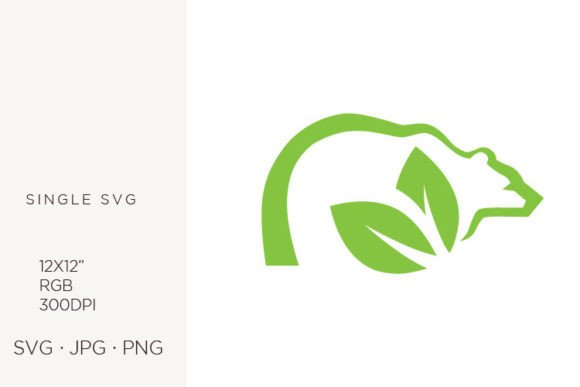
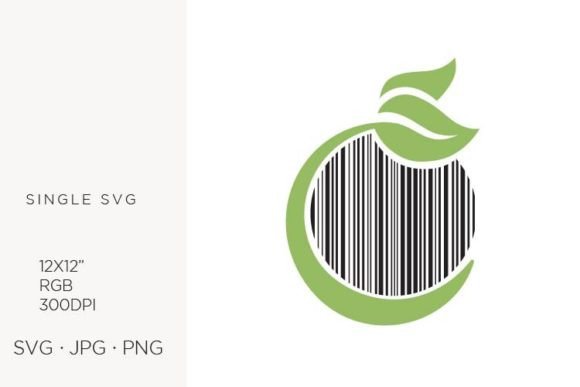
The moment I opened the SVG file, I noticed how thoughtfully the barcode and leaf elements were fused—not slapped together, but integrated. The leaf isn’t a decorative afterthought; its veins subtly echo barcode lines, and the negative space between bars forms organic curves. It reads as modern design, not clipart. The RGB palette leans into muted sage, forest, and olive tones—not neon or oversaturated—so it avoids looking like stock eco-bling. That restraint makes it feel credible for real small business branding, especially for audiences who value authenticity over trend-chasing.
Where It Shines in Real Client Work
Barcode Green Leaf, Vector works exceptionally well when you need layered meaning without visual clutter. For our tea project, we used it across three key touchpoints:
- Packaging design: Placed at the bottom corner of matte-finish tea boxes, scaled to 1.25”, it added subtle texture and narrative—hinting at traceability (barcode) and origin (leaf)—without competing with the hand-lettered product name.
- Social media graphics: As a recurring accent in Instagram carousels and Pinterest pins, it anchored each post’s visual hierarchy. Paired with soft sans serif type (like Inter or Poppins), it elevated marketing visuals from “cute” to “curated.”
- Printable design & merchandise: In the client’s Etsy shop, we embedded it into printable tea ritual guides and sublimation-ready mug mockups. Because it’s built in Adobe Illustrator and delivered as SVG + high-res PNG + JPG, resizing was flawless—even at 8” wide on a tote bag mockup, edges stayed razor-sharp.
Smart Applications Across Creative Use Cases
This isn’t just an icon—it’s a flexible graphic design asset. I’ve tested it successfully in:
- Cricut projects: Cut cleanly on vinyl and cardstock thanks to vector paths and no embedded raster effects.
- Canva templates: Drag-and-drop compatible; the transparent PNG preserved crisp edges over gradient backgrounds.
- Product mockups: Works beautifully on kraft paper labels, ceramic mugs, and linen tea sachets—especially when color-matched to natural material tones.
- Editorial design: Used as a section divider in a digital zine about sustainable agriculture—its duality (tech + nature) reinforced the theme without explanation.
- Print-on-demand: Passed preflight checks for Spoonflower, Printful, and Redbubble with no transparency or bleed issues.
Where to Use It Thoughtfully—Not Automatically
Like any strong visual motif, Barcode Green Leaf, Vector needs context. It doesn’t disappear into minimalist corporate branding—it asserts itself. So avoid it in:
- Ultra-clean tech or finance identities where neutrality is core;
- Small-scale applications under 0.5”, where barcode detail blurs and legibility suffers;
- Crowded layouts with dense typography or patterned backgrounds—its rhythm gets lost;
- Projects requiring strict monochrome—while it converts decently to grayscale, the barcode/leaf interplay loses nuance in pure black-and-white.
Design Judgment Notes You Can’t Skip
Before clearing Barcode Green Leaf, Vector for client use, I always run these checks:
- Test contrast: Drop it on both light oat and deep charcoal backgrounds—verify readability at intended sizes.
- Preview at scale: Zoom out to 25% in Illustrator to assess balance; zoom in to 400% to inspect anchor points and path smoothness.
- Mock it for print: Output a test print at 300 dpi on actual label stock—the RGB-to-CMYK shift can mute greens slightly.
- Check SVG editability: Open in Illustrator and ungroup—confirm layers are named and non-destructive (ours were: “Leaf,” “Barcode,” “Base”).
- Type pairing test: Try it beside serif (Cormorant Garamond), sans (Montserrat), script (Dancing Script), and display (Bebas Neue). It holds strongest with warm, humanist sans serifs and gentle scripts—not rigid geometric fonts.
- Licensing verification: Confirm commercial license covers your client’s use case—especially for print-on-demand, SaaS dashboards, or physical product resale.
Why It Earns a Spot in My Design Assets Toolkit
In a sea of generic leaf icons and forgettable barcodes, Barcode Green Leaf, Vector delivers conceptual cohesion. It supports storytelling—not decoration. For handmade business owners building trust through transparency, it quietly communicates values: traceability, care, craft. For marketers launching seasonal campaigns (think “Spring Harvest” or “Farm-to-Table Week”), it adds thematic resonance without cliché. And for designers juggling Etsy product listings, Canva templates, and client pitch decks, its file versatility—SVG for scalability, PNG for quick drag-and-drop, JPG for email-safe fallbacks—makes it genuinely efficient.
Ultimately, this isn’t just another digital product. It’s a considered creative design element that earns its place when the goal is clarity, consistency, and quiet confidence—not visual noise. If your next project balances ethics and aesthetics—and needs a graphic design asset that does both without shouting—that’s when Barcode Green Leaf, Vector becomes indispensable.