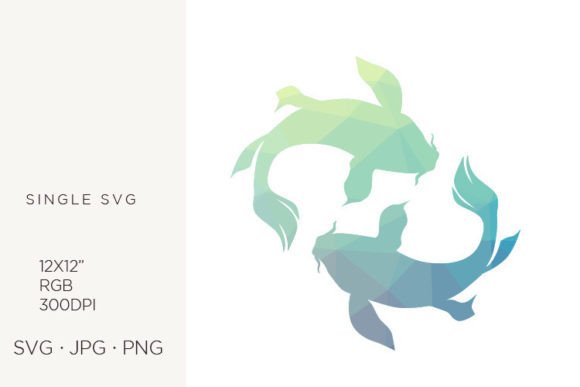
Abstract Fishes, Geometric Vector
A Designer’s First Look: Clean, Playful, and Surprisingly Versatile
When Abstract Fishes, Geometric Vector landed in my inbox, I paused—not because it screamed “attention,” but because it didn’t need to. The shapes are crisp, the negative space intentional, and the fish forms feel both familiar and refreshingly unliteral. This isn’t a cartoon school of fish or a nautical cliché; it’s a distilled, modern interpretation—angular fins, segmented bodies, subtle asymmetry. It lands somewhere between Scandinavian minimalism and mid-century graphic playfulness. For embroidery designers, that balance is gold: recognizable enough to read as “fish” at a glance, abstract enough to avoid looking dated or overly literal on a baby onesie or boutique apron.
Real-World Test: Embroidering a Linen Kitchen Towel for a Local Gift Shop
Last week, I prepped Abstract Fishes, Geometric Vector for a small-batch linen tea towel order—part of a coastal-themed kitchen collection for a downtown craft shop. Linen’s slubby texture and moderate drape demand clarity, not clutter. I converted the SVG into a machine embroidery design with careful attention to stitch density and satin stitch width. What stood out immediately was how well the clean lines translated: no jagged edges, no awkward corners begging for fill-stitch correction. The geometric nature meant fewer curves to wrestle with on the hoop, and the open composition left room for the fabric’s natural character to show through. Customers responded strongly—not just to the motif, but to how *intentional* it felt. That’s the quiet strength of this piece: it reads as handmade without shouting “handmade.”
Where It Shines (and Where It Asks for Thought)
Abstract Fishes, Geometric Vector excels in projects where simplicity carries weight:
- Custom apparel: Works beautifully on sweatshirt cuffs, back yokes, or chest pockets—especially on medium-weight cotton or fleece where stitch definition stays sharp.
- Embroidered patches: Its bold silhouette and minimal internal detail make it ideal for sew-on or iron-on patches on denim jackets or backpacks.
- Baby embroidery: On organic cotton onesies or burp cloths, its gentle abstraction feels soothing—not busy or overwhelming—and avoids overly literal themes that age quickly.
- Holiday and gift items: I’ve used it on linen pillow covers for seaside weddings and as a subtle motif on embroidered holiday cards—always landing as thoughtful, not kitschy.
- Etsy listings & small shop branding: As a logo element or product icon, it adds visual distinction without sacrificing scalability or reproducibility across digital and physical touchpoints.
Use With Intention—Not Assumption
This isn’t a “drop-in-and-stitch” design for every surface. Its geometry demands awareness:
- Small hoop sizes: The clean lines hold up well down to ~3.5”, but avoid shrinking below that—corners can lose definition, especially on textured fabrics.
- Stretchy or thin fabric: Use cutaway stabilizer generously. The angular forms rely on structural integrity; without support, satin stitches may pucker or shift on knits or voile.
- Dark fabric: Test thread colors carefully. Light neutrals (oatmeal, heather grey) pop elegantly, but avoid pale yellow or cream unless you’re confident in your tension and stabilizer combo.
- Curved surfaces (caps, curved tote handles): The flat, graphic nature means it won’t distort gracefully like organic motifs might. Best placed on flatter panels—crown of a cap, center front of a tote.
- Frequent washing: While the design itself is durable, dense satin areas benefit from secure underlay and proper thread choice. Recommend polyester or high-sheen rayon for longevity on kitchen towels or baby items.
What It Adds to Your Finished Product—Beyond Aesthetics
Using Abstract Fishes, Geometric Vector does more than fill space—it elevates perception. On a handmade product, it signals considered design, not just decoration. Customers notice the spacing, the restraint, the way it complements (not competes with) the material. For Etsy sellers, that translates to higher perceived value and stronger brand consistency across listings. For craft fair vendors, it helps items stand out in a sea of florals and script fonts—without feeling cold or sterile. And for commercial embroidery shops? It’s a reliable, licensable asset that clients trust for nursery decor, boutique staff uniforms, or limited-run merchandise—because it looks professional *and* personal.
Practical Notes Every Embroidery Designer Should Run Through
Before stitching your first piece:
- Test the Abstract Fishes, Geometric Vector embroidery file on scrap fabric matching your final project’s weight and stretch.
- Check thread color contrast in both natural and artificial light—what reads clearly on screen may fade on dark linen.
- Review stitch density: too dense = stiff fabric; too sparse = loss of shape. Adjust based on fabric texture.
- Confirm hoop size compatibility—especially if digitizing from SVG yourself. Some versions may require reworking for tight spaces.
- Inspect small details (like fin tips or body segments) at actual stitch scale. Zoom in on your embroidery software preview.
- Mock it up in black and white first—this reveals contrast issues faster than color.
- Compare performance on light vs. dark backgrounds using printable mockups before listing digitally.
- Always use appropriate stabilizer—especially for lightweight or textured substrates like tea towels or baby blankets.
- Verify licensing terms: while described for use in handmade craft items and printed paper goods, confirm whether resale of finished embroidered products or redistribution of digitized files is permitted.